India’s solar EPC sector is at the heart of the country’s unprecedented renewable energy expansion, with a record approximately 45 GW of solar capacity added in FY 2025-26 — vaulting India to third place in global solar energy production. The solar EPC market in India is valued at approximately USD 30 billion annually and growing at 15 to 20 percent as India pursues its 500 GW non-fossil fuel capacity target by 2030. The Budget 2026-27 allocated Rs 329 billion to MNRE and Rs 20,000 crore specifically to the National Green Hydrogen Mission, creating additional downstream solar EPC demand for solar-powered green hydrogen projects. Solar EPC companies earn revenue from engineering, procurement, and construction contracts for utility-scale, commercial and industrial, and distributed rooftop solar projects. Sterling and Wilson Renewable Energy secured Rs 30.9 billion in new orders in Q3 FY26 and signed a five-year framework agreement with Adani Green Energy. KPI Green Energy and Waaree Energies have been expanding aggressively. Let us have a look at the top 10 solar EPC companies in India for the year 2026.
1. Sterling and Wilson Renewable Energy Limited
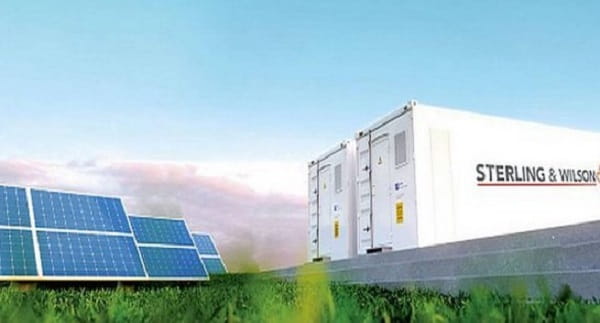
Sterling and Wilson Renewable Energy, a Shapoorji Pallonji Group company and one of India’s largest and most globally experienced solar EPC companies, secured Rs 30.9 billion in new orders in Q3 FY26 and signed a five-year framework agreement with Adani Green Energy Limited — one of the most significant strategic EPC partnerships in India’s renewable energy sector. The company has executed solar projects across 26 countries with total capacity exceeding 14 GW globally and is one of the few Indian solar EPC companies with substantial international project experience in the Middle East, Africa, Europe, and Asia. Sterling and Wilson’s global execution track record combined with its Adani Green partnership provides strong order book visibility.
Sterling and Wilson Renewable Energy serves utility-scale solar project developers globally with its solar EPC construction services, and its five-year Adani Green framework agreement combined with its international project portfolio makes it the most globally experienced and contractually secured large solar EPC company in India’s renewable energy construction sector.
2. Tata Power Solar Systems Limited (TPSSL)
Tata Power Solar Systems Limited, a wholly owned subsidiary of Tata Power Company and the solar EPC and manufacturing arm of the Tata Group’s energy business, combines one of India’s most respected manufacturing capabilities — including a 4.3 GW integrated solar cell and module manufacturing plant in Tirunelveli, Tamil Nadu — with comprehensive solar EPC services spanning utility, commercial, industrial, and rooftop solar. The company has been India’s most active rooftop solar installer with Q1 FY26 additions of 45,500 rooftop solar systems totaling 220 MW cumulative capacity of over 3.4 GW, and it operates the EZ Charge EV infrastructure alongside its solar business.
Tata Power Solar serves utility-scale solar project developers, corporate commercial and industrial solar buyers, and residential rooftop customers with its integrated manufacturing and EPC capability, making it the most vertically integrated Indian solar company — from silicon-based module manufacturing through project execution — and a uniquely comprehensive value chain player in India’s solar industry.
3. Waaree Energies Limited (Solar EPC and Manufacturing)
Waaree Energies, India’s largest solar module manufacturer and listed on Indian stock exchanges, has built an integrated solar business combining module manufacturing with EPC execution that makes it uniquely positioned across the solar value chain. The company’s manufacturing capacity has been expanded significantly and its EPC business leverages its module manufacturing as a captive cost-efficient supply, enabling competitive project bids. Waaree is among the top solar EPC companies in India 2026 and is expanding internationally with a manufacturing facility in the United States targeting the US market’s domestic content requirements for IRA incentives.
Waaree Energies serves utility and commercial solar project developers with its integrated module supply and EPC execution capability, and its vertical integration from manufacturing through installation creates cost advantages in project bids that pure EPC contractors procuring modules from external suppliers cannot match, making it one of India’s most competitive solar project developers and EPC contractors simultaneously.
4. Adani Solar (Mundra Solar PV Limited)
Adani Solar, the manufacturing and EPC subsidiary of the Adani Group and one of India’s largest integrated solar manufacturers, combines module manufacturing at its Mundra facility with solar project EPC execution for the Adani Group’s own enormous renewable project pipeline and external third-party customers. The company’s manufacturing capacity has been scaled rapidly to support the Adani Group’s 30 GW Khavda Renewable Energy Park development — one of the world’s largest renewable energy projects — alongside external project construction. Adani Solar benefits from the captive demand of Adani Green Energy’s aggressive project pipeline.
Adani Solar serves the Adani Group’s massive internal renewable energy project pipeline and external solar project developers with its integrated manufacturing and EPC capabilities, and its captive relationship with Adani Green Energy — the world’s second-largest solar PV developer globally — provides the most consistent and large-volume EPC mandate pipeline of any Indian solar EPC company.
5. KPI Green Energy Limited
KPI Green Energy, a listed Indian solar developer and EPC company headquartered in Gujarat, has emerged as one of India’s most investor-noticed listed solar companies with strong revenue growth from its expanding portfolio of captive power solar projects for industrial and commercial customers alongside utility-scale project development and EPC execution. The company is cited among India’s top solar EPC companies and has been aggressively growing its installed capacity and project execution capabilities to capture the industrial solar market in Gujarat and beyond.
KPI Green Energy serves industrial and commercial solar power buyers and utility-scale project developers with its solar project development and EPC construction services, and its listed status combined with strong revenue growth from Gujarat’s industrially dense market provides investors with direct equity exposure to India’s captive industrial solar power adoption trend.
6. BHEL (Solar EPC Division)
Bharat Heavy Electricals Limited, India’s largest power equipment manufacturer and a Maharatna public sector company, has expanded its solar EPC capabilities as part of its diversification into renewable energy alongside its traditional thermal power plant EPC business. BHEL has executed multiple MW-scale and GW-scale solar EPC projects for public sector utilities and state government agencies, leveraging its existing project management and construction capabilities from thermal power plant EPC into solar project execution. The company’s government ownership provides preferential consideration in state and central government solar procurement.
BHEL serves public sector utilities and government solar programs with its solar EPC capabilities backed by the credibility of its Maharatna government enterprise status, and its transition from thermal power plant focus toward solar EPC represents one of India’s most significant examples of a traditional power equipment company diversifying into renewable energy project construction.
7. L&T Construction (Renewable Energy Business)
Larsen and Toubro’s construction division, through its dedicated Renewable Energy business unit, has rapidly emerged as one of India’s most capable and comprehensive solar EPC contractors leveraging L&T’s extraordinary project management expertise, supply chain relationships, and execution track record from the broader infrastructure sector. L&T has executed large-scale solar and hybrid renewable projects and is increasingly active in the solar EPC market, bringing the credibility of India’s largest EPC company to renewable energy project execution. L&T’s renewable energy order book has been expanding rapidly as India’s solar capacity addition accelerates.
L&T Construction serves utility-scale solar and hybrid renewable energy project developers with the execution credibility of India’s largest and most trusted EPC company, and its entry into renewable energy EPC with the full weight of L&T’s project management expertise and supply chain scale creates one of the most formidable utility-scale solar EPC capabilities available to project developers in India.
8. Greenko Energy Holdings (Solar Plus Storage EPC)
Greenko, one of India’s leading renewable energy companies specialising in dispatchable green power through pumped storage and hybrid solar-wind-storage systems, is uniquely positioned in solar EPC for firm and dispatchable renewable energy rather than pure intermittent solar. The company’s engineering and construction capability for complex hybrid renewable systems combining solar, wind, and storage addresses the most technically demanding renewable energy project requirements where simple solar EPC capability is insufficient. Greenko’s expertise in grid-scale energy storage and hybrid renewable design differentiates it from standard solar-only EPC contractors.
Greenko serves utilities and grid operators requiring firm and dispatchable renewable energy solutions rather than intermittent solar through its engineering and construction capability for complex hybrid renewable systems combining solar, wind, and pumped storage, and its grid-scale storage and hybrid design expertise represents the most technically differentiated solar-adjacent EPC capability in India’s renewable energy sector.
9. Vikram Solar (Solar EPC and Manufacturing)
Vikram Solar, one of India’s established solar module manufacturers and a recognised solar EPC contractor, has built capabilities across module manufacturing and utility-scale project construction for domestic and international clients. The company is among India’s significant solar EPC players cited in industry assessments for its combination of manufacturing quality and EPC execution track record. Vikram Solar’s module manufacturing heritage gives it quality credibility with project developers who want assurance that EPC contractor-supplied modules meet the specifications required for bankable project finance.
Vikram Solar serves solar project developers with its combined module manufacturing and EPC execution capability, and its manufacturing-backed approach to solar EPC provides project finance lenders with greater confidence in technology quality and warranty support compared to EPC contractors who procure modules from multiple independent external suppliers.
10. Rays Power Infra (Solar EPC)
Rays Power Infra, an Indian solar EPC company, is among the significant players in India’s utility-scale and commercial solar project construction market cited in industry assessments of India’s solar EPC sector. The company has executed solar projects across multiple Indian states and represents the growing tier of mid-size Indian solar EPC specialists that collectively contribute the majority of India’s solar project construction alongside the large integrated developers and EPC giants that command the most media visibility in India’s renewable energy sector.
Rays Power Infra serves utility and commercial solar project developers across India’s multiple solar markets with its EPC construction capabilities, and represents the important segment of India’s solar EPC industry where mid-size specialists with strong regional and project-type expertise handle the majority of India’s actual solar capacity additions that power the country’s extraordinary renewable energy growth story.
Frequently Asked Questions (FAQs)
Q: Which is the largest solar EPC company in India in 2026?
A: Sterling and Wilson Renewable Energy is the most globally experienced Indian solar EPC company with over 14 GW of projects executed across 26 countries and Rs 30.9 billion in new Q3 FY26 orders. Tata Power Solar combines solar manufacturing with the largest rooftop solar installation portfolio in India. L&T Construction brings the most credible large-scale project execution capability through India’s largest EPC company’s dedicated renewable energy business unit.
Q: How much solar capacity did India add in FY 2025-26?
A: India added a record approximately 45 GW of solar capacity in FY 2025-26, vaulting India to third place in global solar energy production behind only the United States and China. This represents a structural revolution in India’s energy sector reflecting the cumulative effect of PLI incentives for solar manufacturing, government renewable energy targets, state government solar programs, and falling solar panel prices that have made large-scale solar the cheapest electricity generation option in India’s energy mix.
Q: What is the difference between utility-scale and rooftop solar EPC?
A: Utility-scale solar EPC involves constructing large solar power plants typically 10 MW and above on large land parcels connected to high-voltage grid transmission infrastructure, requiring extensive civil construction, transformer and switchgear installation, and grid connection expertise. Rooftop solar EPC involves installing smaller solar systems typically 1 kW to 1 MW on building rooftops for captive power consumption, requiring structural assessment, roof mounting system design, and net metering connection to the local distribution grid. Tata Power Solar is India’s largest operator in both segments.
Q: What is India’s 500 GW renewable energy target by 2030?
A: India’s government has set an ambitious target to reach 500 GW of non-fossil fuel electricity generation capacity by 2030, up from approximately 283 GW in 2026. Meeting this target requires adding approximately 45 to 50 GW of new renewable capacity annually through 2030, including approximately 35 to 40 GW of solar annually, creating enormous sustained demand for solar EPC companies across utility-scale project construction, commercial and industrial rooftop installations, and distributed residential solar programs.
Q: What is the Approved List of Models and Manufacturers for solar panels in India?
A: India’s ALMM or Approved List of Models and Manufacturers is a government-mandated quality certification framework that restricts solar module procurement for government and government-funded projects to modules from manufacturers whose products have been tested and certified to meet MNRE’s technical standards. This regulation was introduced to ensure quality in India’s solar installations and provides a preference for domestic manufacturers including Waaree, Adani Solar, and Vikram Solar in government tenders while raising barriers for lower-quality imported modules from non-compliant manufacturers.