Electric Vehicle or EV revolution is here, with automakers churning out electric models, driven by consumer demand for sustainable transport options. Rapid growth of electric vehicles is fuelling the demand for more infrastructure facilities for the same, with the most important requirement being charging stations. Consequently, EV charging business has become one of the fastest-growing industries in the world. EV charging stations supply electricity to the plug-in models of electric vehicles. They are akin to conventional petrol pumps or gas stations, however they deliver electric energy to an EV’s battery, instead of petrol or gas. The need for widely accessible EV charging stations is just taking off, with high growth expected in the coming years. Are you interested in investing in EV stations? Or simply curious about its business model and ROI? Let’s delve into some essential details to get a clear understanding.
EV Charging Stations Business Model: A Quick Overview
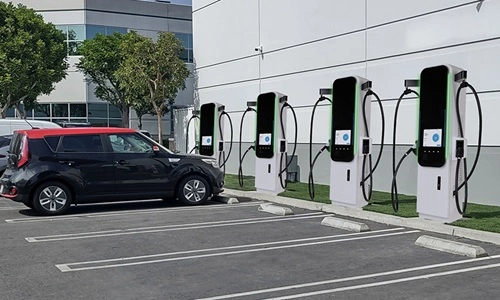
EV charging station business model can be in the form of direct ownership or partnership. In direct ownership model, businesses independently purchase and install EV chargers, followed by handling day-to-day operations and pricing. Thus, the businesses maintain total control over charging infrastructure, pricing and customer services. Partnership, on the other hand, is a collaborative model wherein businesses partner with other entities like restaurants or shopping malls to jointly set up EV charging infrastructure and share the profits.
Network operator is yet another business model for EV charging stations. In this model, a centralised entity builds a network of EV charging stations across multiple locations, followed by franchising the stations or reselling the charging hardware and/or software.
There are multiple types of EV chargers in the market. Level 1 chargers are slow chargers which take 24-60 hours for delivering a full charge to EV batteries. Level 2 chargers are swifter, taking 4-10 hours to fully charge an electric vehicle. Level 3 chargers are direct current fast chargers, with a full-charge time of 20-60 minutes. Investing in a specific type of charger depends upon various factors, including nature of the location and expected customer usage patterns.
How Do Charging Stations Make Money?
1. Pay-Per-Charge Model
EV charging stations commonly generate a major part of their revenues through pay-per-charge model. This pricing model charges the users on the basis of per kilowatt hour of electricity used or per minute of charging time.
Pricing can be fixed like $2-$6 per hour or kWh for level 2 chargers and $0.30-$0.60 per minute or per kWh for DC fast chargers. Variable pricing model based on time can also be used to optimise grid demand.
2. Membership and Subscription
Membership and subscription model is operated by many EV charging networks like Electrify America, Blink, Shell Recharge, ChargePoint and others. Under this model, the EV owners pay a subscription fee on a monthly or annual basis to get access to the charging stations of a network. They get benefits like discounted rates or unlimited level 2 charging.
Subscription model not only generates profits for the networks but also provides a reliable revenue stream to individual station owners.
3. Advertising
EV charging stations can supplement their revenue from direct charging with advertising revenue. Many EV charging stations have digital screens displaying advertisements. Brands pay significant amounts to advertise their products and services at EV charging stations.
4. Ancillary Services
EV charging stations often set up snack bars, vending machines, retail outlets and other types of facilities for their users. This creates opportunities for extra revenue through cross selling.
Profitability Factors
Location and traffic play an important role in the profitability of EV charging stations. Charging stations located in high-traffic areas like highways, business districts, malls and office complexes are likely to be more profitable than the ones located in low traffic areas.
Utilisation rate or number of sessions in a day per connector is another important factor determining the profitability of EV charging stations. DC fast chargers in high traffic areas have higher utilisation rates as compared to level 2 chargers.
Market Value and Growth
Global EV charging station market is projected reached a value of USD 30-46 billion in FY25, up from USD 30 billion in FY24. This translates to a CAGR of 25-30%. China leads with over 10 million public charging stations, followed by India which is projected to reach a network of 1.1 million DC fast charging stations by 2040.