Vishal Mega Mart Retail Limited is an Indian value retail chain, operating a chain of small-sized hypermarkets. It is one of the fastest-growing value retail brands in India, with a strong presence in Tier-2 and Tier-3 cities. The brand has come to be associated with affordable but good quality products, which has given it a big boost particularly among the growing middle-class population in India. You must be wondering how Vishal Mega Mart expanded from a small retail store to one of the largest retail chains in India? What are its revenue sources? What are the factors driving its success? Read on to get the answers to all your questions.
What Are The Fundamentals of VVM’s Business Model?
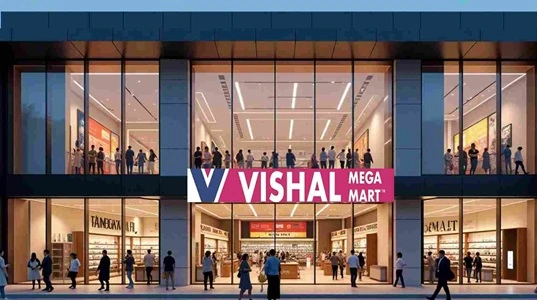
Vishal Mega Mart operates a diversified retail model, blending company-owned and franchised hypermarkets and supermarket-sized retail stores. It has a network of more than 600 stores across more than 400 cities across India, adding up to 11-12 million square feet of retail space. VMM has certain preferences with regards to locations for its stores. These include areas with at least 1 lakh population, parking availability, strong road connectivity and minimum frontage of 40 feet.
Franchisees receive extensive support from Vishal Mega Mart. Support services for franchisees include site evaluation, interior design templates, ongoing supply chain management and replenishment, billing and inventory management software, training modules for store operations, merchandising and product planning, operational assistance and marketing collaterals.
What Are The Products Sold By Vishal Mega Mart?
Vishal Mega Mart sells a wide range of apparels under multiple categories, including men’s wear, women’s wear, children’s wear, ethnic wear, western wear, footwear and accessories. Apart from apparels, the company’s stores also stock general merchandise like kitchen items, furniture, electronics and decor, alongside FMCGs like groceries, snacks, dairy products and detergents.
There is a preponderance of private labels in the VMM stores. Private labels are the products which are made exclusively for Vishal Mega Mart by contract manufacturers. Sourcing products from contract manufacturers helps in supporting high-volume sales while keeping the costs low.
| Company | Vishal Mega Mart |
| Establishment Year | 2001 |
| Headquarters | Gurugram, Haryana, India |
| Founder | Ram Chandra Aggarwal |
| Industry | Value Retail |
| Net Worth | $7.10 billion |
| Total Revenue In 2024 | $1.21 billion |
How Does Vishal Mega Mart Make Money?
1. Apparel
Vishal Mega Mart earns around 45% of its revenue from retail sales of apparel like men’s clothing, women’s clothing, children’s clothing, ethnic wear, western wear and more. 100% of the apparel products are the company’s own brands. Apparel generates high margins due to exclusive designs and contract manufacturing.
2. General Merchandise
Retail sales of general merchandise account for around 28% of the revenue. General Merchandise includes multiple types of products like home essentials, electronics and accessories. GM and apparel sales together make up more than 50% of the revenue earned by Vishal Mega Mart.
3. Fast Moving Consumer Goods
Vishal Mega Mart sells numerous kinds of FMCGs like groceries, staples and daily essentials, accounting for around 27% of the revenue. The FMCGs are sourced from both national brands and private labels. This is a low-margin segment but drives footfalls.
Sales Strategy & Effect of Private Label Brands
VMM’s sales strategy is centred on discount model which is dependent upon bulk procurement, everyday low prices and promotional offers to achieve high-volume transactions. Same-store sales growth in the financial year 2024 stood at 13.6%, reflecting strong customer loyalty.
Vishal Mega Mart’s exclusive own brands or private labels account for 72-74% of its revenue. The company derives multiple advantages by selling its own brands produced by contract manufacturers. They include better control over product quality, lower pricing as compared to other brands, better profit margins and stronger customer loyalty. EBIDTA margins stood at 9-10% in the FY 24, supported by a high proportion of private labels.
What Are The Reasons Behind Vishal Mega Mart’s Success?
Vishal Mega Mart focuses on smaller cities where the competition is low. Around 70% of its stores are located in small cities and even rural areas. Moreover, its leased stores and franchise model reduces capital expenditure.
Value-driven pricing generates small profits on each product but bulk selling leads to high gross profit margins. Moreover, affordability builds loyalty among budget-conscious families, particularly in Tier-2 and Tier-3 cities.
Bulk procurement and optimised logistics reduce operating costs and facilitate rapid scaling without financial strain.