D-Mart is India’s largest and fastest-growing supermarket chain, which is operated by Avenue Supermarts Ltd. The company was founded by Radhakishan Damani in 2002 to offer FMCG Products, groceries, home and personal care, apparel, general merchandise, and appliances through its large retail stores. The company follows a low-cost strategy where everyday products are offered at a low price with a wide assortment of products at a competitive price point.
D-Mart has tight cost control and operates stores in areas with a strong demand. In the past few years, D-mart has been expanding its store network, and it is adding more online and omnichannel features through Dmart Ready, etc. By all this, D-mart can ensure efficiency, and all this has benefits in the company’s revenue. In FY2025, there was a strong growth of 16-17% with an increase in net profit as well. This business is dependent upon volume and economies of scale. The efficiency in the supply chain and owning many of its stores instead of leasing helps in competing in the market.
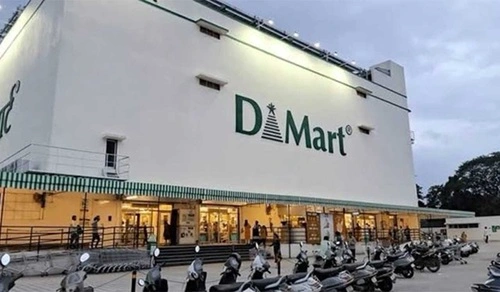
To understand how D-Mart makes money, learning about its business structure, revenue streams, and financial performances will be helpful. Let’s get started.
How is the D-Mart business Model Structured?
D-Mart operates its business through a chain-store and owned-store retail model. Most competitors often lease many outlets or use a franchisee model, where the costs are higher and quality control becomes a major setback. As D-Mart owns most of its stores, it has the potential to make money by reducing the price to such an extent that competitors can’t meet.
As customers walk into D-Mart, they can find everyday goods and other products at an unbeatable price point, which makes those customers shop for more products than they intended to buy. This strategy works perfectly in favour as profit drives through the sale of volume. The cost structure is managed by controlling the real estate cost through ownership, lean staffing, and an efficient supply chain network. D-Mart does minimal advertising, and it also minimizes wastage to ensure complete control of its revenue.
| Company/Brand | Avenue Supermarts Ltd (D-Mart) |
| Establishment Year | 2002 (first store opened May 2002) |
| Headquarters | Mumbai, Maharashtra, India |
| Founder/Owner | Radhakishan Damani |
| Industry | Retail / Supermarket / Hypermarket / FMCG / General Merchandise |
| Net Worth (2025) | Rs. 57,790 crore (consolidated) |
| Total Revenue 2025 | Rs. 2,927 crore |
How Does D-Mart Make Money?
The strategy used by D-Mart is quite simple but effective. However, D-Mart does not rely on one source of revenue; instead, they have multiple streams, which make up a large chunk.
1. Product Sales in Physical Stores
One of the key sources of revenue that makes a large chunk is product sales in physical stores. It sells groceries, staples, food items, FMCG, general merchandise, etc. Most of this revenue comes from its owned stores, and all this helps in increasing the revenue. The more stores D-Mart opens, the more profit it makes through the retail of products. Due to this, D-Mart tries to offer more product lines to attract a higher number of customers.
2. Everyday Low Price Strategy
D-Mart uses an EDLP (Everyday Low Price) model rather than heavy promotions or discount festivals. This strategy helps customer loyalty, predictable inventory turnover, less waste, and avoids margin erosion from heavy promotional discounts. It also helps in supplier negotiations: since D-Mart orders in bulk and with consistent demand, it can procure at better rates. Low prices attract more customers, leading to higher volume as well.
3. Cost Control Via Store Ownership
Cluster expansion technique is one of the most famous and highly effective strategies that help in reducing expenses and increasing revenue. D-Mart uses this strategy, where it owns most of its stores instead of leasing them to save recurring rent costs. It also uses methods like opening multiple stores in a region, which reduces logistics, transportation, and distribution costs at once.
4. Supply Chain Efficiency
Through complete control of the supply chain, it is possible to maintain efficiency in the business. The same strategy is used by D-Mart, and it also uses its efficiency model in warehousing and inventory turnover. The company buys goods directly from manufacturers in large volumes and also opts for reduced intermediaries. Through this method, D-Mart gets the same product directly from manufacturers at a much lower price point.
Financial Performance
In FY 2025, D-Mart reported total revenue of Rs. 57,790 crores, up from about Rs. 49,533 crores in FY 2024. Net profit after tax (PAT) in FY 2025 was Rs. 2,927 crores, up from Rs. 2,695 crores in FY 2024; PAT margin ~5.1% (vs ~5.4%).
What’s New in FY2025?
D-Mart had 415 stores as of 31 March 2025, up from earlier years; it continues to open stores steadily (~45-60 planned per annum) to increase its footprint. The online / “Dmart Ready” business saw ~21% YoY growth to ~₹ 3,502 crore in FY25, though losses widened due to expansion costs and last-mile delivery challenges.