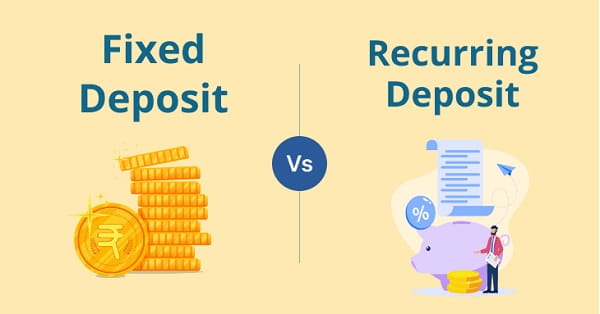
Yes, RD (Recurring Deposit) is considered a good investment for people who want safe, disciplined, and low-risk savings with guaranteed returns. It is especially useful for salaried individuals, students, and conservative investors who prefer investing small amounts regularly instead of a large lump sum. However, RD is not ideal for high wealth creation because returns are usually lower than long-term equity investments and may struggle to beat inflation over long periods.
For short-to-medium-term financial goals and stable savings habits, RD remains one of the simplest and most trusted investment options.

What Is an RD?
Recurring Deposit, commonly called RD, is a savings scheme offered by banks and post offices where investors deposit a fixed amount every month for a fixed tenure.
At maturity, the investor receives:
- Total deposited amount
- Guaranteed interest earned
RD works similarly to an FD, but instead of investing a lump sum, you invest gradually through monthly contributions.
Why RD Is Considered a Good Investment
Encourages Disciplined Saving
One of the biggest advantages of RD is financial discipline.
Because investors contribute fixed amounts monthly, RD helps develop consistent saving habits.
This makes it useful for people who struggle to save money regularly.
Guaranteed Returns
Unlike stocks or mutual funds, RD provides fixed and predictable returns.
You already know:
- Monthly deposit amount
- Interest rate
- Maturity value
- Investment duration
This stability appeals strongly to conservative investors.
Very Low Risk
RDs offered by established banks and post offices are generally considered low-risk investments.
Returns are not directly affected by:
- Stock market crashes
- Economic panic
- Crypto volatility
This safety gives investors peace of mind.
Affordable for Small Investors
RDs allow investing small amounts every month.
This makes them suitable for:
- Students
- Salaried employees
- First-time investors
- Families planning small goals
People can start RDs without needing large savings initially.
Useful for Short-Term Goals
RDs are commonly used for goals such as:
- Emergency funds
- Travel savings
- Education expenses
- Festival planning
- Gadget purchases
The fixed structure helps investors stay committed to their goals.
Flexible Tenure Options
Banks offer RD tenures ranging from a few months to several years.
This flexibility helps investors match investments with financial goals.
Why RD Can Be a Weak Investment for Some Investors
Returns May Not Beat Inflation
This is one of the biggest disadvantages.
Although RDs are safe, inflation can reduce the real value of returns over long periods.
Your money grows steadily, but purchasing power may not increase significantly.
Lower Wealth Creation Potential
Compared to:
- Equity mutual funds
- Stocks
- SIP investments
RDs usually provide lower long-term growth.
Aggressive investors seeking strong wealth creation may find RDs too conservative.
Interest Income Is Taxable
RD interest is generally taxable according to the investor’s income tax slab.
This reduces actual post-tax returns.
Premature Withdrawal Penalties
Breaking an RD before maturity may lead to:
- Penalty charges
- Reduced interest rates
This slightly reduces liquidity flexibility.
Fixed Returns Limit Upside
If market interest rates rise after opening the RD, existing deposits may continue earning lower locked rates.
Also, RD returns do not benefit from stock market rallies or high-growth opportunities.
RD vs FD
This comparison is common.
RD Advantages
- Monthly investing habit
- No large lump sum needed
- Better for gradual savings
FD Advantages
- Higher initial investment growth
- Better for lump-sum investors
- Slightly simpler structure
Both are low-risk investments with guaranteed returns.
RD vs SIP
SIP Advantages
- Higher long-term return potential
- Better inflation-beating capability
- Wealth creation opportunities
RD Advantages
- Guaranteed returns
- Lower risk
- Stable growth
- No market volatility
SIPs usually suit growth-focused investors, while RDs suit safety-focused savers.
Who Should Invest in RD?
RD may suit:
- Conservative investors
- Salaried employees
- Students
- Beginners
- People saving for short-term goals
- Investors uncomfortable with market risk
Who May Not Prefer RD?
RD may not suit:
- Aggressive investors
- Long-term wealth maximizers
- Investors seeking inflation-beating returns
- People comfortable with stock market investing
Is RD Still Worth It Today?
Even with the popularity of mutual funds and crypto, RD remains relevant because many people still prioritize:
- Safety
- Predictability
- Financial discipline
- Guaranteed returns
Not every investor wants market-linked risk.
For cautious savers, RD continues to be a practical option.
Important Reality About RD
RD should usually not be viewed as a high-growth investment.
Its biggest strengths are:
- Stability
- Simplicity
- Discipline
- Capital safety
For many investors, RD works best for short-term savings goals rather than long-term aggressive wealth creation.
Final Verdict
Yes, RD is a good investment for conservative investors seeking safe, disciplined, and predictable savings growth.
It helps build saving habits, offers guaranteed returns, and works well for short-term financial planning. However, RD is not ideal for maximizing long-term wealth because returns are relatively modest and may struggle against inflation over time.
For many people, RD works best as a safe savings tool alongside higher-growth investments like SIPs or mutual funds.
FAQs
Q: Is RD completely safe?
A: RDs from established banks and post offices are generally considered low-risk investments.
Q: Can RD give better returns than SIP?
A: Usually no. SIPs may provide higher long-term growth potential, but they carry market risk.
Q: Is RD better than FD?
A: RD is better for monthly saving discipline, while FD suits lump-sum investing.
Q: Is RD interest taxable?
A: es. RD interest is generally taxable according to the investor’s income tax slab.
Q: Can I withdraw RD before maturity?
A: Yes, but banks may charge penalties or reduce interest for premature withdrawal.